


TPM Program Execution: Planning, Risk & Milestone Management
Master complex manufacturing programs with risk-aware planning and cross-functional coordination
What You Can Do
You can transform sprawling manufacturing initiatives into structured programs with clear dependencies, risk profiles, and milestone tracking. Claude generates dependency matrices, risk quantification frameworks, and milestone roadmaps tailored to your program structure. You get executable plans that align cross-functional teams and anticipate bottlenecks before they derail schedules.
Features
Visualize task interdependencies across teams and identify critical paths that could delay program completion by weeks or months.
Score risks by probability and impact, estimate contingency buffers, and prioritize mitigation efforts where they matter most.
Structure multi-phase programs with clear milestones, decision gates, and handoff criteria for seamless team transitions.
Generate communication strategies and role assignments to keep manufacturing, supply chain, quality, and engineering synchronized.
Assess team availability, skill gaps, and equipment constraints to spot capacity bottlenecks before they impact timelines.
Develop actionable mitigation tactics for top risks with owner assignments and trigger conditions for escalation.
Create metrics and reporting templates so stakeholders see real-time status, variance, and early warning signals.
Define decision criteria and escalation paths so teams know when and how to involve leadership for corrective action.
Example Output
Dependency Matrix Output:
| Task | Owner | Duration | Predecessors | Slack (days) |
|---|---|---|---|---|
| Design supplier qualification | Procurement | 21d | — | 0 |
| Tooling build | Manufacturing | 35d | Supplier qualification | 5 |
| First article inspection | Quality | 14d | Tooling build | 5 |
| Pilot production run | Operations | 21d | FAI sign-off | 2 |
Risk Register Sample:
- Supplier capacity risk — Probability: High (75%), Impact: Schedule slip 30 days — Mitigation: Identify dual supplier by month 2 — Owner: Procurement
- Design change risk — Probability: Medium (45%), Impact: Cost overrun $250K — Mitigation: Lock design by week 8 — Owner: Engineering
- Tooling ramp delay — Probability: Medium (50%), Impact: Pilot delayed 14 days — Mitigation: Pre-position equipment, monthly vendor audits — Owner: Manufacturing
Milestone Roadmap:
Month 1-2: Supplier qualification + design freeze → Month 3-4: Tooling build + parallel FAI planning → Month 5: FAI execution + pilot prep → Month 6: Pilot production + yield ramp → Month 7: Full production readiness
What's Included
- Dependency Mapping Templates: Pre-built matrices and Gantt chart structures to model task sequences, handoffs, and critical path calculations.
- Risk Assessment Framework: Probability-impact scoring model, risk register template, and heat-map visualization to prioritize mitigation efforts.
- Milestone Planning Worksheets: Gate definitions, acceptance criteria, and resource checklists for each phase of your program.
- Cross-Functional Communication Guides: Role-responsibility matrices (RACI), meeting cadence templates, and stakeholder engagement plans.
- Program Health Metrics & Dashboards: KPI definitions, variance analysis templates, and visual status report formats for leadership.
- Escalation & Decision Trees: Decision criteria for when to escalate, required stakeholders at each level, and corrective action protocols.
Who It's For
- Program Managers
- Manufacturing or Operations Directors
- Supply Chain Leaders
- Plant Managers
- Engineering Program Leads
Best For
- Multi-team manufacturing program planning
- Risk assessment and mitigation planning
- Milestone forecasting and critical path analysis
- Cross-functional dependency mapping
- Program health monitoring and escalation protocols
You might also like
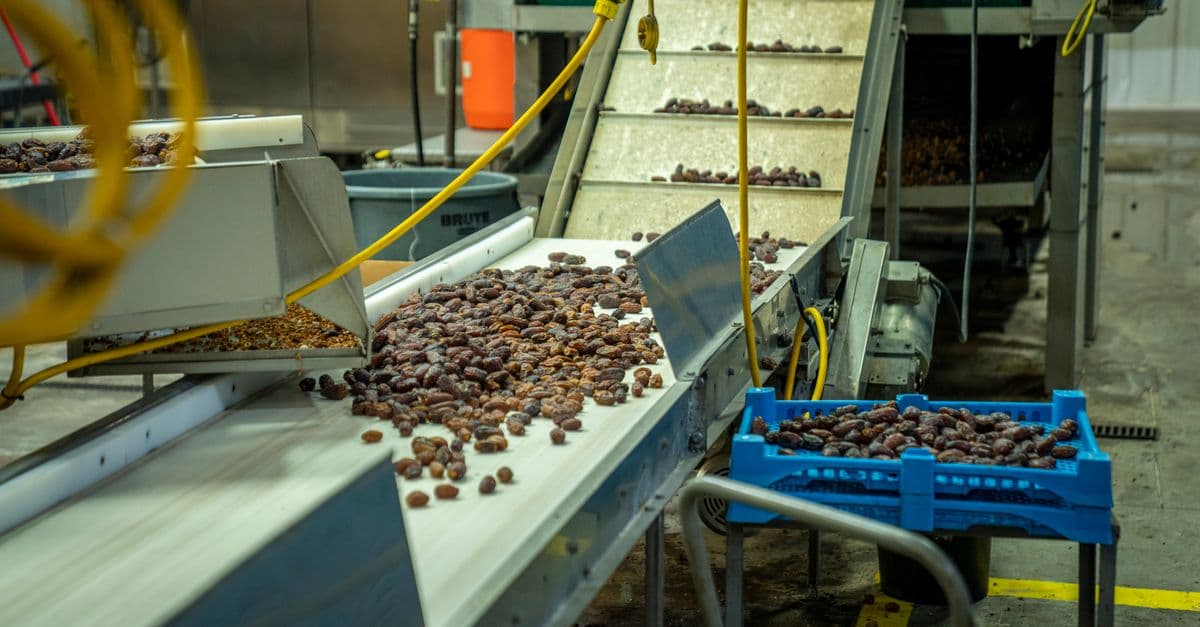
You provide production data and process details, and this skill systematically analyzes the information to identify root causes of quality issues, yield losses, or equipment failures. It develops prioritized corrective actions with implementation timelines, compliance documentation, and performance metrics to track improvement effectiveness.
 by kylezantos

You can build interactive UI components with purposeful motion—transitions, hover states, micro-interactions, and enter/exit animations—or audit existing motion design and receive detailed feedback. The skill operates in two focused modes: Create mode helps you implement motion that serves a clear purpose, while Audit mode evaluates your animations against industry-standard principles and reports specific findings with improvement recommendations.
by kylezantos
This skill guides you through systematic root cause analysis for manufacturing defects, helping you move beyond surface symptoms to uncover underlying failure mechanisms. You'll build investigation workflows, interpret production data, develop corrective actions backed by evidence-based reasoning, and prevent recurrence through structured follow-up.
by kylezantos
You can systematically analyze process upsets, equipment failures, and quality issues to pinpoint root causes and recommend corrective actions. This skill guides you through structured troubleshooting methodologies, evaluates process parameters against specifications, and identifies safety risks associated with failures. You'll generate documentation suitable for incident reports and continuous improvement initiatives.
by kylezantos
This skill parses experiment metadata and outputs to extract critical metrics from completed machine learning experiments. It reads experiment_summary.yaml to identify runs, pulls final training loss from SLURM logs, extracts accuracy metrics from inspect-ai evaluation files, and generates a clean summary.md report—all while logging the extraction process for reproducibility.
by kylezantos
You can structure and run Kaizen events from start to finish, guiding your team through waste analysis, root-cause identification, and rapid improvement design. The skill generates detailed event agendas, countermeasure documentation, and performance metrics—enabling you to close improvement opportunities within days rather than weeks.
by kylezantos
This skill structures and accelerates improvement initiatives using the PDCA (Plan-Do-Check-Act) framework combined with 5 Why analysis and standardized work templates. You'll build data-driven problem statements, identify root causes systematically, and create actionable improvement plans with built-in controls. It enables teams to move from reactive firefighting to proactive, continuous optimization grounded in evidence.
by kylezantos
You can diagnose root causes of yield loss, identify process drift in real time, and optimize critical parameters using structured troubleshooting frameworks. The skill helps you prioritize corrective actions based on statistical analysis, accelerate problem resolution, and build repeatable optimization workflows that your team can execute consistently across production runs.
by kylezantos