

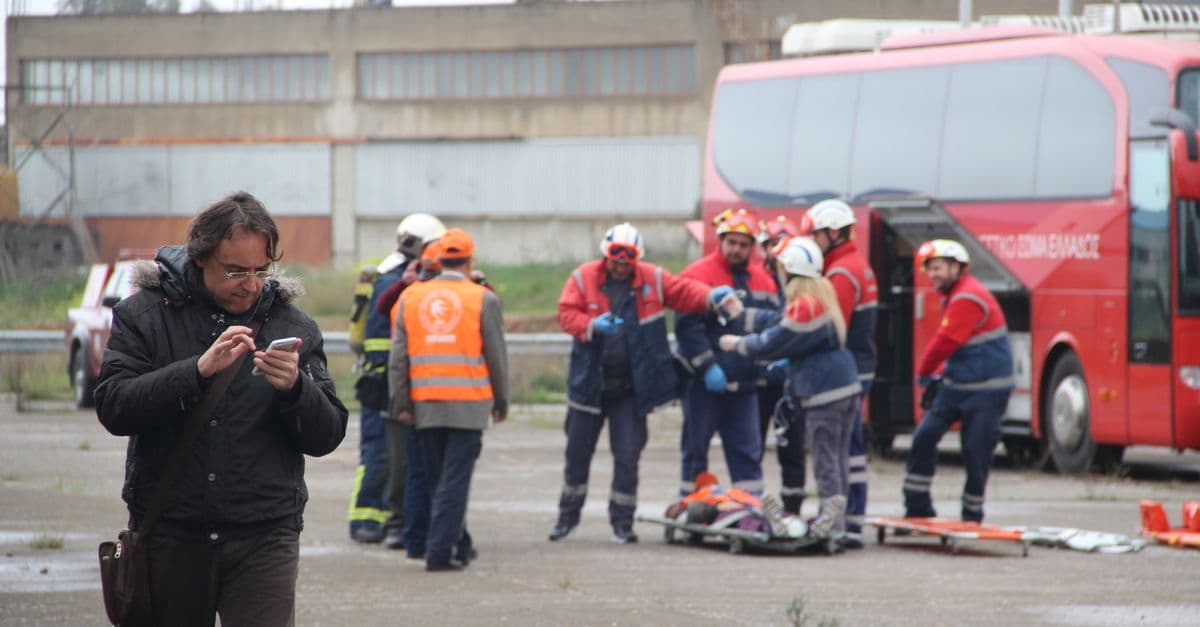
Multi-Agency Incident Coordination Assistant
Coordinate multi-agency emergency response with unified command messaging
What You Can Do
You can maintain a shared operational picture across multiple agencies, translate between agency-specific jargon to ensure clarity, allocate resources across jurisdictional boundaries without conflicts, and generate standardized briefings for multi-agency command calls. This skill helps incident commanders prevent duplication, identify resource gaps, flag conflicting orders, and keep every responding agency synchronized on roles and priorities.
Features
automatically identify required agencies and check resource availability against incident scope
convert agency-specific protocols and terminology into standardized incident command language
detect overlapping resource requests, flag conflicts, and recommend allocation to prevent duplication
produce standardized situation reports (SitReps) for command calls with shared operational picture
visualize unified command hierarchy and verify every agency understands reporting lines and responsibilities
track mutual aid agreement activation, cross-jurisdictional resource requests, and reimbursement requirements
maintain chronological record of decisions, resource movements, and status changes across all agencies
identify contradictory orders or resource assignments and escalate to incident commander for resolution
Example Output
Example 1: Multi-Agency Activation
Input: Structure fire at downtown warehouse, 5-alarm incident, mutual aid activated
Output:
AGENCY ACTIVATION SUMMARY
✓ City Fire (primary) — 8 engine companies, 2 ladder trucks, hazmat unit
✓ County Fire (mutual aid) — 6 engine companies, aerial apparatus
✓ State Police (traffic/perimeter) — 4 units assigned
✓ City PD (scene control) — 6 units, evacuation radius 2 blocks
✓ EMS (staging) — 3 ambulances, 2 paramedic units
✓ County Emergency Mgmt (logistics)

RESOURCE GAPS DETECTED
⚠ Hazmat team (city) only resource — request county hazmat on standby
⚠ No heavy rescue — consider calling regional technical rescue task force
Example 2: Command Briefing
Input: 45-minute update for unified command call
Output:
SITUATION REPORT — 14:45 Hours

INCIDENT STATUS: Active interior operations, 40% contained
LOCATION: 425 Industrial Blvd (grid reference 38.5°N, 120.2°W)
WEATHER: 28 mph winds, gusting to 35 mph (pushing toward residential)

AGENCY ASSIGNMENTS (current positions)
- City Fire: Interior attack (Divisions A/B), water supply ops
- County Fire: Mop-up staging, mutual aid reserves
- State Police: Perimeter 500m, traffic control on Routes 4 & 9
- City PD: Evacuation (3 blocks, ~2,100 residents)

RESOURCE STATUS
✓ All requested equipment arrived
⚠ County hazmat en route (ETA 15 min)
✓ Mutual aid logistics set up at staging area

NEXT STEPS: Shift to defensive posture if winds exceed 32 mph
What's Included
- SKILL.md instruction file with multi-agency coordination protocols:
- Agency activation checklist (preset lists by incident type):
- Unified command structure template (city/county/state hierarchy):
- Resource inventory tracker (equipment, personnel, mutual aid capacity):
- SitRep template (standardized briefing format for command calls):
- Conflict detection framework (flagging contradictory orders/assignments):
- Multi-agency communication log (record of decisions and status changes):
Who It's For
- Emergency managers coordinating multi-agency incident response
- Incident commanders overseeing county or regional emergency operations
- Dispatch center supervisors activating mutual aid resources
- Public safety administrators managing unified command structure
- Emergency operations center (EOC) liaisons tracking cross-agency coordination
Best For
- Large-scale incidents requiring 3+ responding agencies (fires, floods, hazmat, mass casualty)
- Mutual aid activation and resource allocation across jurisdictions
- Multi-agency command calls and unified situation briefings
- Preventing resource duplication and identifying gaps in response
- Translating agency-specific protocols into standardized incident command language
You might also like

You can rapidly analyze disparate incident intelligence—surveillance observations, suspect history, behavioral indicators, and site conditions—to produce comprehensive risk profiles that guide tactical decision-making. The skill generates operationally prescriptive assessments that clearly identify threat level, required assets, officer safety considerations, and contingency planning, helping you determine whether standard patrol or tactical units should handle apprehension, and ensuring warrant service and containment operations are informed by documented threat justification.
 by geemal2004
You can orchestrate recovery operations spanning months or years by coordinating multiple agencies, tracking resource deployment, and assessing evolving community needs. Claude helps you document recovery priorities, identify unmet needs by sector (housing, debris, utilities, mental health), and generate compliance-ready status reports that keep FEMA, state emergency managers, and elected officials informed. This skill bridges the gap between emergency response and sustained recovery by managing complexity across jurisdictions without losing sight of individual survivor needs.
by geemal2004
You can conduct structured fire code violation assessments that transform raw inspection data into enforceable compliance documentation. The skill maps violations to specific code sections, stratifies risk from immediate threats to administrative issues, and generates notice-of-violation orders with clear corrective action timelines and appeal-resistant reasoning chains that hold up under administrative hearings and legal challenge.
by geemal2004
You can create defensible chain-of-custody documentation that proves digital evidence remained unchanged and legally handled from acquisition through court presentation. This skill guides you through systematic logging of every custody transfer, access event, storage condition, and handler—building an unbroken narrative that satisfies legal standards and withstands adversarial scrutiny. By using structured protocols and Claude verification, you eliminate documentation gaps that could render evidence inadmissible.
by geemal2004
You can convert raw DNA laboratory data, mixture interpretations, and statistical findings into structured, defensible forensic reports aligned with SWGDAM guidelines and legal standards. The skill helps you organize complex genetic evidence across multiple data streams—profiles, CODIS matches, population statistics, and mixture resolutions—into coherent case narratives that maintain scientific precision while remaining accessible for expert testimony. You'll reduce report preparation time by 40-60% while improving consistency and legal defensibility across DNA cases.
by geemal2004
You can organize complex trace evidence cases from evidence intake through expert report generation. The framework guides you through meticulous documentation, comparative microscopy protocols, interpretation of transfer mechanisms, statistical significance assessment, and preparation of expert testimony materials. This ensures your findings are scientifically defensible and properly contextualized for criminal proceedings.
by geemal2004
You can organize and analyze complex fire investigation data including physical evidence, witness testimony, environmental conditions, and building systems information to identify fire origin and probable cause. Claude helps you cross-reference evidence against NFPA 921 guidelines, synthesize large documentation volumes, and build defensible timelines—all while you maintain investigator authority and scene expertise. The skill supports both administrative findings and legal proceedings with methodical documentation.
by geemal2004
This skill systematically validates chain-of-custody records for digital forensic evidence against federal, state, and local legal standards. You input your CoC documentation and the skill identifies gaps, inconsistencies, and procedural violations that could compromise evidence admissibility, then generates defensible narratives explaining how evidence remained uncontaminated throughout collection, storage, and analysis.
by geemal2004