

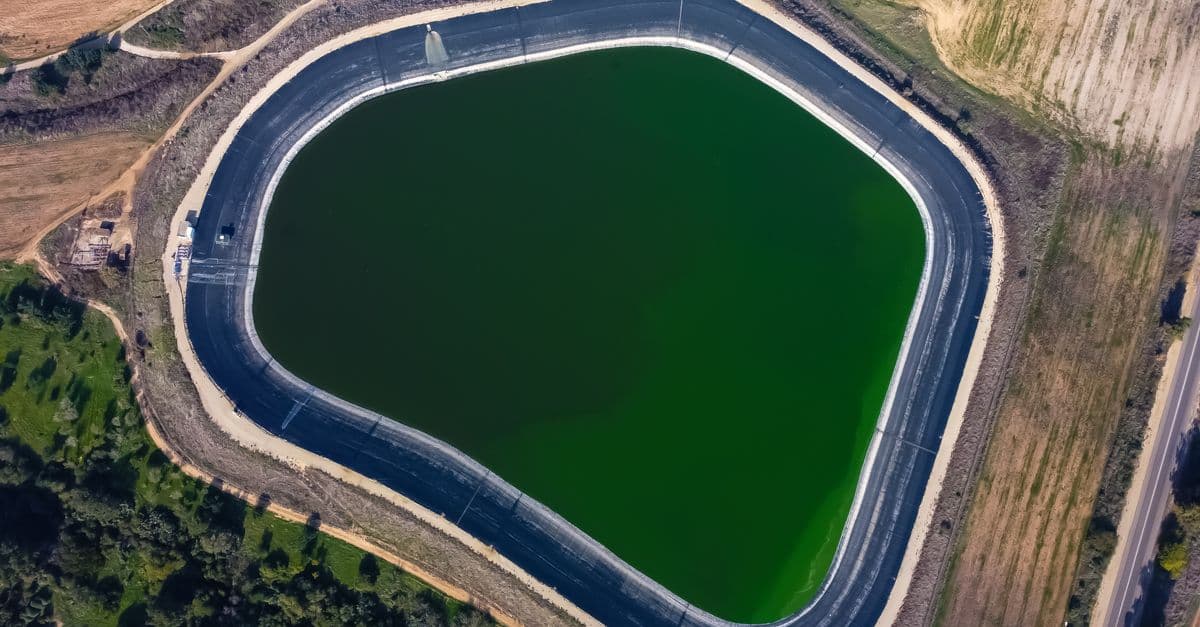
Groundwater Contamination Assessment & Remediation Strategy
Model groundwater contaminants and develop regulatory-compliant remediation strategies
What You Can Do
You can analyze site contamination data and model contaminant fate and transport to predict plume migration. You'll generate quantified risk assessments that demonstrate regulatory compliance, then design and cost-justify remediation strategies tailored to your site's hydrogeology and regulatory requirements.
Features
Profile contaminant type, concentration, depth, and mobility classification based on soil properties and hydrogeological conditions.
Predict contaminant plume migration using aquifer parameters (porosity, gradient, hydraulic conductivity) and attenuation rates, with spatial extent forecasts over time.
Calculate Health Risk Indices (HHI), hazard quotients, and carcinogenic/non-carcinogenic risk for identified exposure pathways.
Align your assessment to EPA Maximum Contaminant Levels (MCLs), state drinking water standards, risk-based corrective action (RBCA) frameworks, and local ordinances.
Compare technology options (pump & treat, in-situ oxidation, soil vapor extraction, containment, natural attenuation) with effectiveness, timeline, and implementation feasibility.
Estimate capital and operating costs, timeframe-to-compliance, and long-term monitoring requirements for each remediation approach.
Generate defensible reports suitable for regulatory agency submission, including data tables, risk calculations, and remediation justification.
Quantify confidence in predictions by testing how changes in hydrogeological parameters affect plume extent and risk outcomes.
Example Output
Example 1: Risk Assessment Summary
Site: Industrial facility, TCE contamination
Current HHI: 2.3 (exceeds EPA threshold of 1.0)
Primary pathway: Groundwater → municipal well (500 m downgradient)
Compliance gap: Current 85 µg/L TCE; MCL = 5 µg/L
Recommendation: Pump & treat system (12-year timeline, $2.1M capital) achieves compliance by 2038.
Example 2: Plume Prediction (5-Year Forecast)
Year 0: Plume center 50 m downgradient, 150 m wide
Year 5: Plume center 120 m downgradient, 240 m wide
Year 10: Plume center 210 m downgradient, 380 m wide
90% Confidence: ±40 m center position due to aquifer heterogeneity
Example 3: Remediation Comparison
| Technology | Capital Cost | Timeline | Residual Risk | Regulatory Barrier |
|---|---|---|---|---|
| Pump & Treat | $2.1M | 12 years | Low | None |
| In-Situ Oxidation | $1.8M | 8 years | Medium | Requires pilot test |
| Containment | $400K | 2 years | High | Requires deed notice |
| Natural Attenuation | $0 | 25+ years | Very High | Data-intensive monitoring |
What's Included
- Site Characterization Intake Form: Structured template for collecting contaminant type, concentration, depth, soil properties, hydrogeological data, and receptor information.
- Fate & Transport Calculator: Automated contaminant migration modeling that predicts plume spread based on aquifer parameters and generates 5/10/25-year forecasts.
- Risk Assessment Quantifier: Calculation engine for Health Risk Indices, carcinogenic/non-carcinogenic hazard quotients, and comparison to EPA/state thresholds.
- Remediation Comparison Matrix: Side-by-side evaluation of treatment technologies (pump & treat, in-situ, containment, natural attenuation) with cost, timeline, and effectiveness scoring.
- Regulatory Compliance Checklist: EPA and state-specific requirements mapped to your site's contamination type and location, with alignment verification.
- Professional Report Generator: Formats all analysis into a defensible technical document ready for regulatory agency submission with data tables and regulatory justification.
Who It's For
- Environmental Hydrogeologists
- Environmental Engineers & Consultants
- Environmental Compliance Officers
- Site Remediation Project Managers
- Regulatory Affairs Specialists
Best For
- Phase II/III Environmental Site Assessments (ESAs)
- Risk-Based Remedial Investigation & Feasibility Studies (RI/FS)
- Contaminant Plume Characterization & Forecasting
- Regulatory Approval Documentation & Compliance Justification
- Remediation Technology Selection & Cost-Benefit Analysis
You might also like
You can synthesize field observations, geophysical logs, and geological interpretations into coherent conceptual hydrogeological models tailored for mining operations. The skill integrates disparate data sources into a unified framework, interprets hydrogeological properties, quantifies uncertainty, and generates technical documentation ready for mine planning and environmental assessments. It accelerates the transition from raw exploration data to decision-ready hydrogeological conceptualizations.
 by mediazard

You can automatically process orebody geometry data, estimate ore grades from assay results, and implement quality control workflows. This skill helps you identify grade anomalies, interpolate spatial distributions, and generate comprehensive quality reports that ensure consistent ore extraction standards.
by mediazard
You can generate complete, scalable course curriculums with learning-optimized content structured for Teachable platforms. Claude creates module outlines, lesson content, assessments, and engagement strategies tailored to your subject matter and target audience. The skill handles curriculum mapping, learning objective alignment, content formatting, and student progress milestones—saving you weeks of course design work.
by mediazard
You can build, parameterize, and validate numerical groundwater flow models using structured workflows for data interpretation and calibration. The skill guides you through conceptual model development, parameter estimation, sensitivity analysis, and model documentation that meets professional standards for water resource engineering and hydrogeological consulting projects.
by mediazard
You interpret hydrogeological and chemical data to systematically characterize contamination sources, map exposure pathways, and evaluate migration risk. You synthesize site data into a defensible conceptual model, compare remedial technologies against regulatory requirements and cost-benefit criteria, and produce decision-support documentation for stakeholders. This accelerates compliance timelines and helps you select the most cost-effective remediation strategy for complex multi-contamination scenarios.
by mediazard
You can design comprehensive course structures in Canvas, optimize navigation for better student outcomes, create reusable templates for modules and assessments, and automate repetitive administrative setup tasks. Claude helps you build courses that balance pedagogical best practices with administrative efficiency, reducing setup time while improving student experience.
by mediazard
You systematically interpret 2D/3D seismic sections, integrate well log data to anchor your picks, and quantify confidence in your structural and stratigraphic interpretations. Claude guides you through horizon mapping, fault definition, well-to-seismic ties, and risk assessment—turning raw data into defensible subsurface models with explicit uncertainty bounds.
by mediazard
Design and structure Canvas courses with built-in accessibility compliance, generate consistent rubric frameworks for assessment, and automate bulk operations like user enrollment and grade posting. You'll create scalable course templates, audit existing courses for WCAG 2.1 AA standards, and generate Python scripts to automate repetitive Canvas admin tasks across multiple courses.
by mediazard