

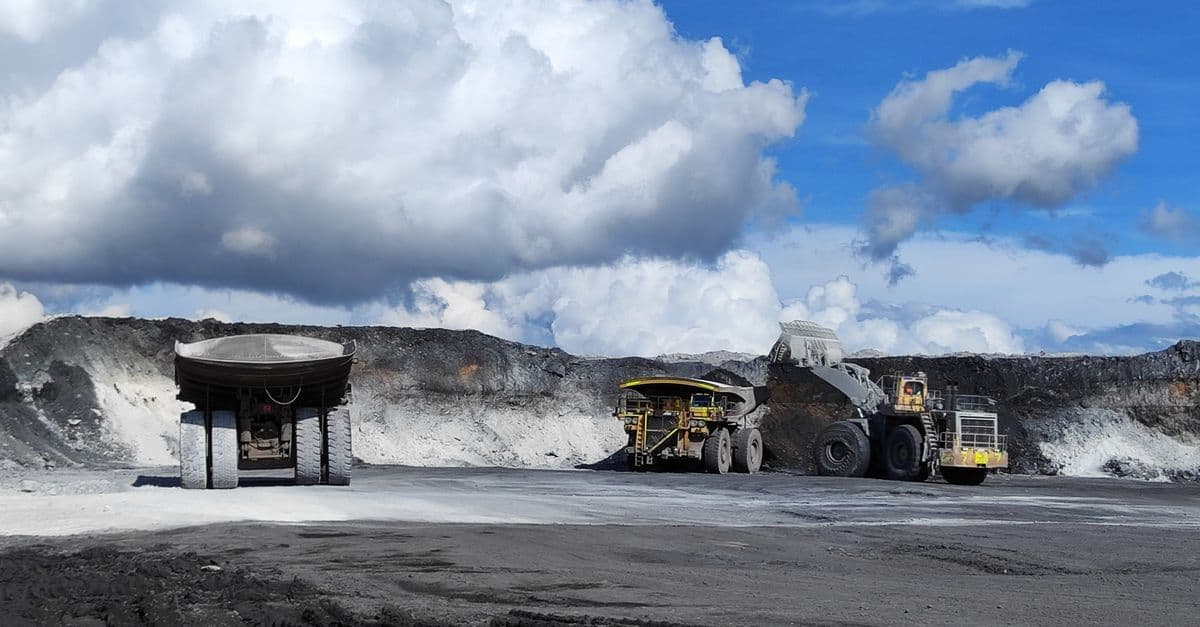
Mine Closure Planning & Environmental Risk Assessment
Develop mine closure plans with environmental risk assessment and regulatory compliance mapping
What You Can Do
You can develop comprehensive mine closure plans that synthesize environmental, regulatory, and operational factors into executable strategies. This skill helps you identify closure-phase environmental risks (acid rock drainage, tailings stability, pit lakes, dust control), map multi-jurisdictional compliance requirements, structure detailed closure sequences with clear responsibilities and timelines, and integrate stakeholder concerns into planning documentation. The result is a defensible closure plan ready for regulatory submission and community engagement.
Features
systematically identify closure-phase hazards including acid rock drainage, tailings remobilization, pit lake formation, dust generation, and ground stability
align closure plans with multi-jurisdictional requirements and track compliance obligations across all regulatory layers
develop sequenced closure phases with clear timelines, task assignments, responsibilities, and success criteria
synthesize community concerns, Indigenous engagement, and regulatory feedback into closure planning documents
design specific monitoring programs matched to identified environmental risks and long-term land use objectives
build detailed task-level cost breakdowns to support financial provisioning and regulatory submissions
prepare defensible justifications for closure approaches aligned with specific site conditions and regulatory expectations
Example Output
Example 1: Acid Rock Drainage Risk Assessment Output
- Risk: Pyrite oxidation in pit walls post-closure → acidic runoff → downstream water quality degradation
- Mitigation: Pit lake formation (water cover) by Year 3 post-closure; pH buffering via limestone placement; 30-year post-closure water quality monitoring
- Regulatory basis: State mining closure regulations §12.4.3 (long-term water management); Federal Clean Water Act compliance
- Stakeholder alignment: Downstream agricultural users, tribal water rights consultation documented
Example 2: Tailings Storage Facility Closure Sequence
- Year 0–1: Deposition cessation, final cover placement, drainage infrastructure completion
- Year 1–3: Vegetation establishment, geotechnical stability monitoring quarterly
- Year 3–10: Transition to post-closure monitoring (annual inspections)
- Cost estimate: $2.3M capping + $450K/year monitoring for 10 years
- Compliance: meets State TSF closure rule 15.5.2 and acid-base accounting requirements
Example 3: Stakeholder Engagement Summary
- Community concerns: dust generation during reclamation, post-closure land use clarity
- Mitigation commitments: dust suppression during Years 0–2; land transfer to conservation trust by Year 5
- Documentation: signed stakeholder agreement template with monitoring transparency provisions
What's Included
- SKILL.md instruction file with structured closure planning methodology:
- Environmental Risk Register Template: hazard identification, likelihood/consequence assessment, and mitigation strategy worksheet
- Regulatory Compliance Checklist: federal, state, and local requirement tracking matrix
- Closure Plan Outline Framework: phased structure (pre-closure, active closure, post-closure monitoring) with section requirements
- Stakeholder Engagement Tracker: consultation log, concern resolution matrix, and documentation template
- Post-Closure Monitoring Program Checklist: risk-specific monitoring parameters, frequency, and decision criteria
- Closure Cost Estimation Worksheet: task-level cost breakdown supporting financial provisioning
Who It's For
- Mining Environmental Engineers developing initial or updated closure plans
- Environmental Compliance Managers preparing regulatory submissions and tracking multi-jurisdictional requirements
- Mine Site Closure Managers transitioning operations to post-closure phase and managing closure sequencing
- Regulatory Affairs Professionals building defensible closure documentation for agency review
- Consulting Environmental Firms structuring closure plans for client mining operations
Best For
- Initial mine closure plan development (3–10 year horizon)
- Closure plan updates following environmental baseline changes or new regulations
- Regulatory submissions requiring detailed closure strategies
- Post-closure monitoring program specification and design
- Stakeholder engagement documentation and concern integration
- Tailings storage facility (TSF) closure planning
- Multi-site portfolio closure planning with comparative risk assessment
You might also like
You can systematically diagnose unexpected drops in extraction yield by analyzing feed assay, product assay, temperature logs, residence time, and reagent consumption data. This skill ranks likely failure points by probability, quantifies recovery rate deviations from baseline, and recommends corrective actions tied to process thermodynamics and kinetics—transforming raw data into actionable troubleshooting reports within minutes.
 by jkfnc

You can systematically evaluate supply chain vulnerabilities, identify cascading failure modes, and develop detailed contingency plans for humanitarian operations. The skill creates structured risk matrices, maps dependencies between logistics nodes, and generates actionable mitigation strategies tailored to your operational context. You'll receive comprehensive risk assessments that account for geopolitical factors, infrastructure constraints, and resource availability.
by jkfnc
Accelerate supply chain planning for disaster relief, refugee operations, and humanitarian missions by analyzing complex logistics scenarios, identifying bottlenecks, and generating contingency plans. You'll coordinate multi-stakeholder logistics networks, optimize resource allocation across regions, and stress-test supply chains for disruption scenarios—reducing planning time from weeks to hours.
by jkfnc
You can rapidly design comprehensive monitoring and evaluation frameworks tailored to your program context. Claude helps you map indicators to data collection methods, create validated survey instruments, establish quality assurance protocols, and generate sampling strategies—all aligned with your theory of change and evaluation questions.
by jkfnc
You'll design comprehensive agricultural value chains that connect smallholder farmers directly to profitable markets. This skill provides structured assessment frameworks to identify bottlenecks, analyzes organizational models for farmer collectives, and develops inclusive market linkage strategies that strengthen both farmer income and supply chain resilience. You'll produce actionable roadmaps with financial projections, risk mitigation plans, and implementation timelines.
by jkfnc
Upload or paste real-time ventilation monitoring data—temperature readings, gas concentrations (CO₂, CH₄, O₂), airflow rates, and pressure differentials—and Claude analyzes patterns to diagnose specific problems like fan failures, duct blockages, recirculation zones, or inadequate fresh air distribution. You get a structured diagnostic report with identified root causes and prioritized corrective actions, ready to present to your team or regulatory inspectors.
by jkfnc
You can systematically diagnose furnace underperformance by analyzing operational data (temperature profiles, gas composition, pressure drop, throughput, assay data) to pinpoint whether issues stem from feed variability, thermal loss, equipment drift, or process chemistry imbalances. The skill produces a prioritized corrective action plan validated against thermodynamic constraints, enabling you to recover metal recovery rates, reduce refractory wear, cut energy costs, and stabilize slag composition—typically within 24 hours of analysis.
by jkfnc
You can develop comprehensive impact evaluation frameworks tailored to your development interventions, including theory of change models, mixed-method data instruments, and structured analysis plans. The skill helps you specify outcome indicators, design comparison groups, build sampling strategies, and plan qualitative and quantitative analysis approaches that generate credible evidence of program impact.
by jkfnc