


Architectural Design Reviewer
Systematically review architectural designs for code compliance and structural feasibility
What You Can Do
You can conduct rigorous architectural design reviews that verify compliance with building codes, accessibility standards, energy regulations, and client requirements. The skill produces evidence-based, severity-ranked findings with specific remediation recommendations and regulatory citations, enabling you to identify issues before design phase submission or construction document preparation.
Features
systematically check designs against International Building Code (IBC), local amendments, and jurisdiction-specific codes with cite-backs
verify accessibility compliance with specific regulatory references and remediation guidance
assess structural viability and identify coordination gaps with engineering scope
evaluate designs against energy regulations and sustainability performance requirements
categorize issues as Critical, Major, or Minor with specific modification recommendations
cross-reference design elements against project requirements matrix
include specific code sections and standards references for each finding
Example Output
Example 1: Code Compliance Finding
- Critical: Occupancy separation wall at third floor does not meet 2-hour fire rating requirement per IBC Section 706.4. Recommend upgrading to Type X drywall assembly or equivalent rated assembly.
Example 2: ADA Compliance Issue
- Major: Accessible route to employee work area has 5% slope exceeding ADA Standard 403.3 maximum of 5%. Recommend modifying path or providing accessible alternative route per ADA 206.2.2.
Example 3: Energy Efficiency Note
- Minor: Window-to-wall ratio on south elevation (42%) exceeds IECC recommended 30% for climate zone 5A. Consider exterior shading or high-performance glazing to optimize thermal performance.
What's Included
- SKILL.md instruction file for systematic design review protocols:
- Architectural compliance checklist covering IBC, ADA, energy codes, and structural requirements:
- Severity classification framework (Critical/Major/Minor) with remediation templates:
- Regulatory citation reference guide for common code sections:
- Client requirement traceability matrix template:
- Design review report template with findings documentation structure:
Who It's For
- Project architects conducting internal design reviews at SD and CD phases
- Design leaders performing quality assurance verification before submissions
- Architecture firm quality control reviewers ensuring code compliance
- Design principals reviewing junior architect work products
- Building officials or third-party design reviewers conducting independent verification
Best For
- Design review at 50% design development phase milestone
- Pre-construction document submittal verification
- Design modifications requiring compliance re-verification
- Multi-disciplinary coordination screening before engineer reviews
- Client presentations requiring code compliance documentation
You might also like
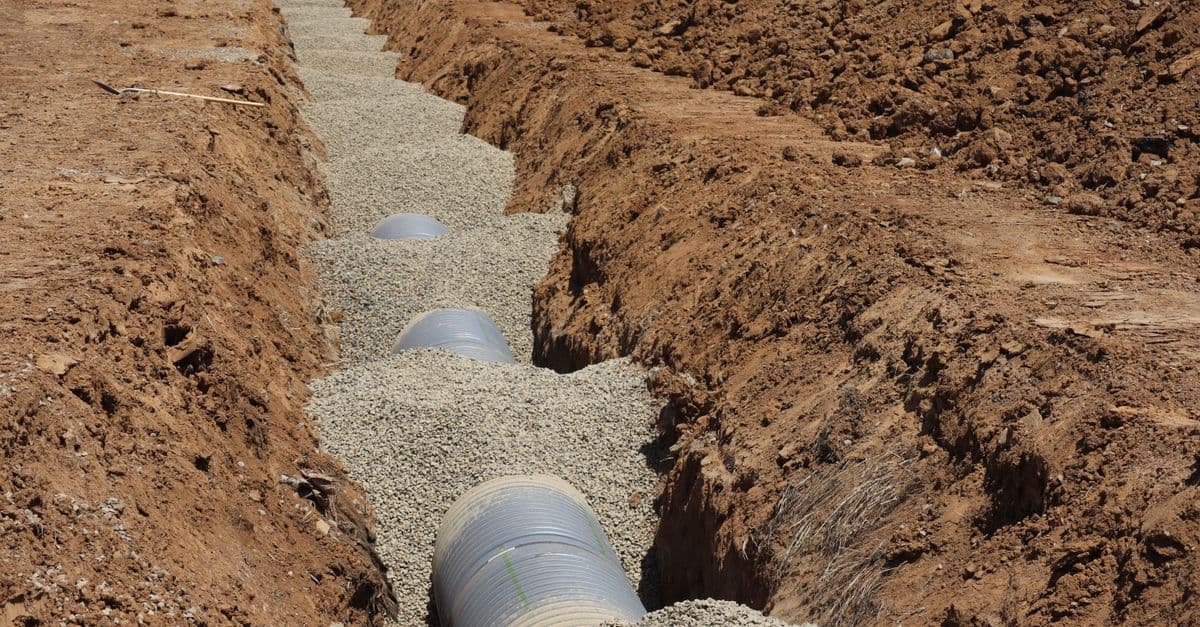
You can transform raw geotechnical field data into professional-grade site investigation reports that include soil classification using USCS standards, bearing capacity calculations, settlement predictions, and specific foundation design recommendations. The skill organizes stratigraphic information across multiple boring locations, cross-references laboratory test results, and produces defensible conclusions compliant with IBC, ASCE 7, and local building codes—suitable for building officials, structural engineers, and construction teams.
 by az9713

You can conduct comprehensive safety impact assessments for any transportation design intervention—from intersection redesigns to speed reduction corridors. The skill guides you through hazard identification, risk quantification using established methodologies (conflict studies, crash prediction models), and evidence-based mitigation development. You'll produce defensible safety documentation suitable for audits, litigation, and project approvals.
by az9713
Quickly evaluate pavement design scenarios using AASHTO 1993 methodology to calculate required structural thickness for flexible (asphalt) and rigid (concrete) pavements. Analyze traffic loading by computing Equivalent Single Axle Loads (ESALs), assess subgrade conditions through CBR interpretation, and compare multiple design alternatives with different material combinations to optimize cost and performance. Generate preliminary design documentation with technical justification for client presentations and design reports.
by az9713
This skill cross-references your residential design specifications against jurisdiction-specific building codes (IBC, IRC, local amendments) to identify code violations, ambiguous details inspectors will challenge, and compliance documentation gaps. You can validate designs across multiple jurisdictions, evaluate design trade-offs (fire-rating vs. acoustic performance), and generate compliance narratives that support permit applications—all before formal submission.
by az9713
You can input room dimensions, functional requirements, and design constraints to receive optimized furniture layouts with documented traffic flow patterns and compliance verification. Claude analyzes competing spatial demands—usable area, sightlines, egress, zoning—and produces data-driven plans that satisfy functional, regulatory, and aesthetic objectives simultaneously. This accelerates initial space planning and helps identify conflicts before costly revisions.
by az9713
This skill deconstructs your writing samples to identify the specific patterns, personality markers, emotional range, language quirks, and formatting habits that make your voice uniquely yours. You'll receive a detailed voice DNA profile that includes your core communication style, signature phrases, emotional tone, formality level, and what you actively avoid—creating a blueprint that AI systems can use to replicate your authentic voice consistently across projects, platforms, and content types.
by az9713
Design earth retention systems by inputting soil properties, site geometry, and regulatory requirements. Claude calculates lateral earth pressures using Coulomb, Rankine, and Mononobe-Okabe methods, verifies factors of safety for internal and external stability, compares competing retention concepts (gravity walls, cantilever, anchored, sheet-pile, soil-nail), and generates cost-benefit analysis and regulatory documentation packages ready for permit submission.
by az9713
Query your local Screenpipe instance to retrieve screen recordings, audio transcriptions, UI element accessibility trees, keyboard/mouse input logs, and productivity analytics. You can search by keywords, filter by content type (audio, OCR, accessibility, input), set time ranges, and extract structured data about your applications, meetings, and work sessions without sending data to external servers.
by az9713